

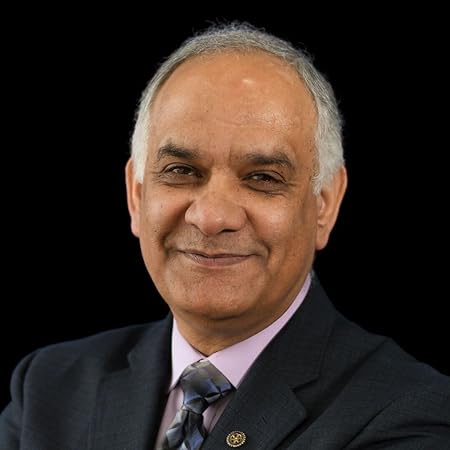
Sometimes here on the Blog, an article truly stops us in our tracks. That was our reaction this week when we read this extremely poignant column in the Wall Steet Journal. It tells the tale of a couple, Glenn and Karen Ruffenach, who had all their retirement plans in place – until Karen’s Alzheimer’s disease diagnosis intervened.
Glenn Ruffenach is no stranger to the issues facing seniors: he is a former Wall Street Journal retirement columnist. His first-person narrative is tender and honest, without rancor or resentment. We lack the space to recount his words in full, but the story of the Ruffenachs should serve as a cautionary tale to us all. The message: plan well and do your best to be prepared for whatever life throws your way.
(Please note that a subscription may be required to access the Wall Street Journal website.)
Four Years After Retirement, A Dreaded Diagnosis
“I had heard the adage many times: Man plans, God laughs,” Ruffenach begins. “I just never imagined it would apply to my retirement.”
Ten years ago, he tells us, Glenn and his wife Karen retired from full-time work. Then, only four years after that, Karen was diagnosed with Alzheimer’s. “Within a year, I was a full-time caregiver, a role I still play today,” Ruffenach writes. “And the retirement we had spent so much time planning and working toward ground to a halt.”
The irony? Retirement planning had been Ruffenach’s expertise as an editor and reporter for The Wall Street Journal for three decades. “I even co-wrote a book about later life and ‘how to plan it, live it and enjoy it,’ as the subtitle promised,” he adds.
“We Had Our Blueprint and Our Nest Egg”
Ruffenach admits that when he and Karen retired, they were feeling pretty confident about their ability to navigate their senior years. “We had our blueprint. We had our nest egg. We had our health. All that was left was to toast our good fortune and enjoy the ride,” he writes.
But after Karen’s diagnosis, everything changed, and the challenges are a daily part of life. Ruffenach explains, “Alzheimer’s, like many progressive diseases, is, by turns, heart-wrenching, demoralizing and draining. For me, in particular, our experiences have upended much of what I knew, or thought I knew, about later life—for instance, the certainty that I could easily mix leisure, work and volunteering.”
That said, Ruffenach sees the struggle as an opportunity for growth and continued learning about what matters most, especially in the aging process.
“Karen and I might have been dealt a bad hand, but we’re still very much in the game,” he writes.
Caregiving is Now a Full-Time Job
Ruffenach feels no need to sugarcoat the reality that their days revolve almost entirely around Karen and her needs—and her needs are many. She requires help and support with pretty much every daily task. She is also nonverbal because of the disease, and she struggles with paranoia.
“At times, Karen thinks ‘bad people’ are coming to get her and, as such, insists she must leave our house,” Ruffenach writes. “Which is what she did one cold evening two years ago, slipping out the back door while I was on the phone. Almost three terrifying hours later, the police found her, huddled on a neighbor’s porch. (We now have an alarm system that alerts me whenever an exterior door is opened.)”
Keeping a Promise Made 47 Years Before
Ruffenach sees his caregiving as a fulfillment of the promise he made to Karen 47 years prior: “in sickness and in health.” He sees it as an honor and a grave responsibility that comes with near-daily uncertainty and anxiety.
He writes, “Fatigue is far and away my biggest problem. I am always tired, primarily from helping Karen navigate each day, but also from losing sleep over what lies ahead. Namely: How, and how quickly, will her symptoms worsen? (And they will worsen. That’s how this illness works.)”
Soul-Searching Questions are Tinged with Anxiety, Self-Pity
The questions that plague Ruffenach are haunting: “Can I continue to care for her on my own? (Yes, I can hire help, but I have this notion—part principled, part foolish—that this task is my responsibility and mine alone.) Will I need, at some point, to move Karen to a memory-care facility? (Or should I do so now? A good friend thinks Karen could benefit today from the specialized care in such settings.) And how will our nest egg hold up when it comes to paying for such services? (The cost for quality care in our area starts at about $12,000 a month.)”
These anxieties, he says, are “salted” with other emotions, like anger and self-pity. “I recognize, of course, that life isn’t fair and that many families are grappling with circumstances far crueler than ours,” he writes. “That said, I can’t help but wonder about what might have been: the classes and lectures we had hoped to attend, the volunteer work we had planned to pursue, the trips we had wanted to take.”
The Power of Faith in an Uncertain Journey
Even at his lowest, Ruffenach feels that his faith steps in to buoy him up. He knows that he and Karen can no longer have the retirement they imaged, and he feels that he can either “sulk and stew” about it, or he can accept it and be grateful for the blessings present in their everyday.
Instead of the retirement they planned, Ruffenach calls what they have a “mini” retirement.
They go for daily slow walks, and eat lunch or dinner with friends at least once a week. They take classes designed for people with dementia and their caregivers and play “senior bingo” at their church. They spend time with family, go to the movies and the neighborhood pool, look through photo albums, and sing together. Ruffenach adds as a parenthetical: “Astonishingly, Karen is still capable, at times, of singing, if not speaking.”
He writes, “In short, we seek out and cherish small moments. Which, to be honest, have always been the best parts of our marriage. And are now the best parts of our retirement.”
Experience Has Taught New Lessons About Retirement
When it comes to lessons learned, Ruffenach feels that it’s one thing to study and write about a subject and something else altogether to live it. Experience has been a stern teacher.
“In hindsight, for instance, Karen and I should have downsized,” he writes. “We had talked about it for years: selling our large empty nest (with our bedroom on the second floor) and moving someplace more manageable and affordable—a home or community where we could ‘age in place.’ I was certain it would be the right decision in the long run, especially if one or both of us became ill or disabled.”
He adds, “As is often the case, though, inertia got in the way. Today, I have my hands full caring for Karen; caring, as well, for our house and our large yard is a headache I could have avoided.”
Dreams Deferred: A Bucket List That Will Never be Achieved
Another thing he wishes they hadn’t waited on was travel. While he and Karen took several memorable trips in the years before her diagnosis, there were several “dream journeys” left to take, and they assumed they would have plenty of time.
“Again, in hindsight, I wish we had managed our dreams differently,” he writes. “I don’t think we would have necessarily crammed more trips into the first years of retirement. Well, maybe one or two. But we could have done a better job of identifying and pursuing the wanderings that were most important to us.”
He adds, “Looking back, I suppose I thought that life would have more respect for our retirement plans.”
Long-Term Care Planning Started Too Late
Hindsight is clearer about finances, too. Ruffenach writes, “I think it’s critical for would-be retirees to have some kind of plan to pay for long-term care, if needed. (A federal study in 2019 found that fully 70 percent of adults who reach age 65 will need some type of long-term services or support before they die.)”
While he did start studying the possibility of buying long-term-care insurance for himself and Karen in their 50s, he admits that he started his research too late. “I ended up qualifying for coverage—but Karen didn’t,” he writes. “If I had acted earlier, the reason, in all likelihood, never would have surfaced, and Karen wouldn’t have been rejected.”
While Ruffenach notes that he realizes LTC insurance isn’t for everyone, he believes that it’s an option that should at least be explored, since “planning for the possibility of long-term care and its attendant—and possibly staggering—costs is essential. This is something I’m still researching and discussing with our financial adviser. For the moment, though, any bills tied to Karen’s care will come entirely from our savings.”
Biggest Regret: Not Seeking Medical Help Sooner
One regret haunts Ruffenach most of all: that it’s possible Karen’s dementia began earlier than they realized. “I either missed some of the signs (for instance, her gradual loss of interest in gardening, an activity she loved), or simply was in denial,” he writes.
While the couple did eventually seek out the services of a neurologist, Ruffenach believes it wasn’t quick enough, and he takes the blame. “I would advise anyone today to seek help sooner rather than later—in particular, given new drugs that can help slow dementia in its early stages in some patients,” he writes.
No “Hollywood Experience” – but a Surprise Tender Moment
Ruffenach ends his article with a touching anecdote.
He explains that friends will occasionally ask him if he’s had a “Hollywood experience” with Karen, referring to the closing scene in the film “The Notebook” in which the wife—struggling with dementia—suddenly recognizes her husband. Ruffenach believes that Karen only recognizes him about half the time.
He writes, “It wasn’t Hollywood, exactly, but a recent happenstance just might sustain me for whatever lies ahead. I was helping Karen dry off after a shower, and I whispered to her, as I often do, ‘I’ll take care of you, honey. I’ll take care of you.’ As a rule, Karen—beyond nodding her head—no longer replies to anything I say to her. But on this particular morning, she looked up, smiled brightly, and said: ‘And I’ll take care of you.’”
Ruffenach concludes, “Yes, you will, honey. You always will.”
(Originally reported at www.wsj.com)